Finding Your Creative Community (When You Don't Know Anyone)
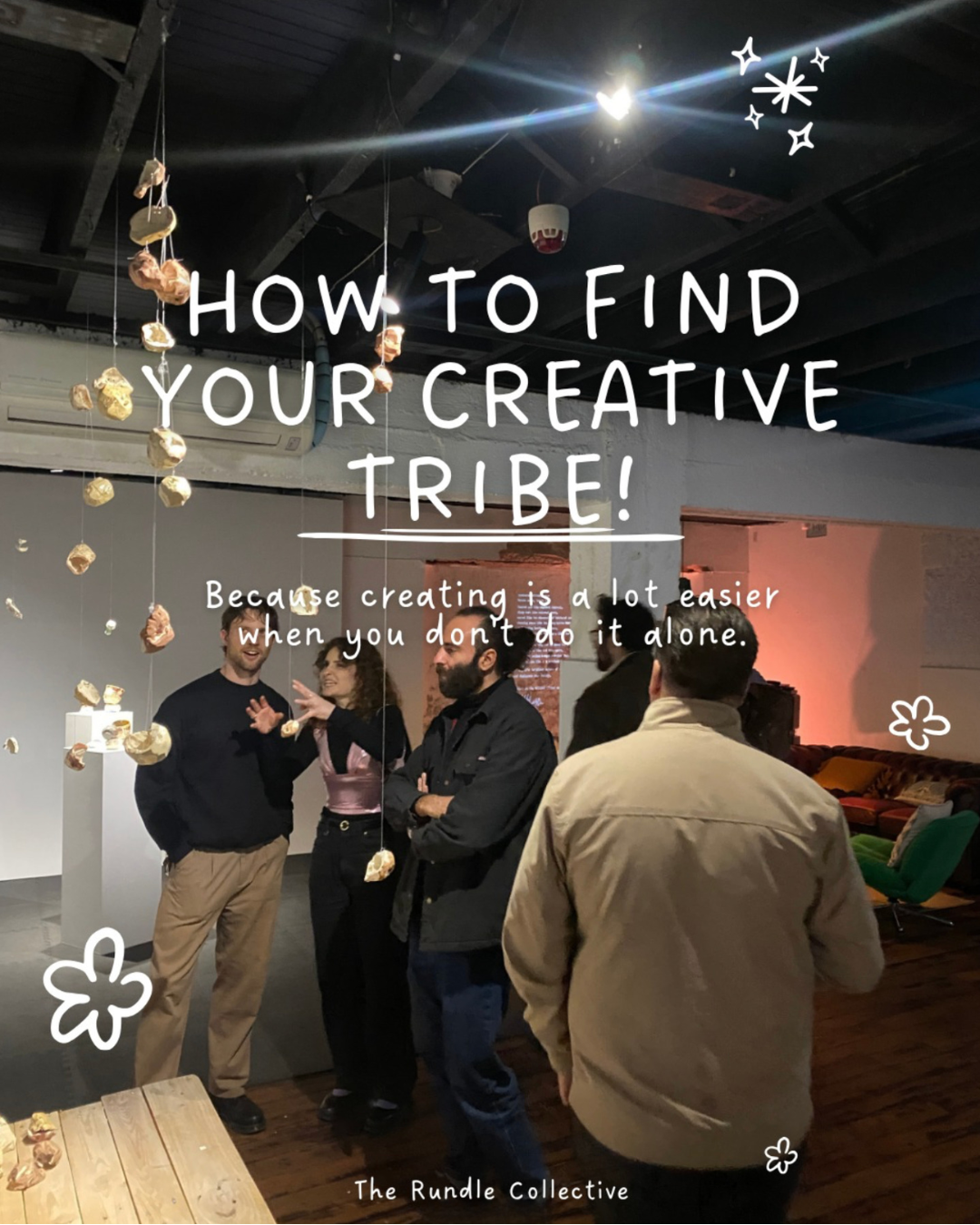
Being a creative can be surprisingly lonely.
A lot of the actual making happens alone, and when you're emerging into the creative industry it can sometimes feel like everybody else already knows each other.
They don't.
And you don't need to wait for someone to invite you into the creative community.
Go to things
This sounds ridiculously simple, but it's one of the most effective things you can do.
Go to exhibition openings.
Markets.
Artist talks.
Workshops.
Open studios.
Creative events.
You don't need to network aggressively or hand everyone a business card.
Just start being present.
When you regularly show up in creative spaces, you'll naturally begin seeing the same people.
That's often how community starts.
Actually talk to people
You don't need an elevator pitch.
Try:
“What kind of work do you make?”
“How did you hear about this exhibition?”
“I've seen your work online — it's lovely to finally meet you.”
Most creatives are very happy to talk about what they're making.
And chances are, someone else in the room is feeling just as awkward as you are.
Take a workshop
Workshops are one of the easiest ways to meet people because you already have something in common.
You're sitting together.
You're making something.
You have an obvious thing to talk about.
And even if you don't leave with your new creative best friend, you've learnt something and supported another artist.
Join a shared creative space
Yes, we're slightly biased about this one.
But there is something incredibly valuable about working around other creatives.
You might be a painter sitting next to a ceramicist, across from a photographer, down the hall from a fashion designer and sharing lunch with a tattoo artist.
Those everyday conversations lead to advice, collaborations, referrals, opportunities and friendships.
Sometimes you just need someone nearby who understands why you've been staring at the same canvas for four hours.
Use social media socially
Don't just post your own work and leave.
Follow local creatives.
Comment on their work.
Share exhibitions you enjoyed.
Celebrate other people's wins.
Respond to stories.
Start conversations.
Online connections very often become real-world creative relationships.
Don't approach every relationship as an opportunity
This one matters.
Creative community isn't networking with nicer branding.
You don't need to calculate what every person can do for your career.
Support people's exhibitions.
Buy something from another artist when you can.
Share their work.
Recommend them for opportunities.
Answer a question if you know the answer.
Community works when support moves in every direction.
Ask questions
You don't need to know everything before you're allowed to call yourself an artist.
Ask someone how they approached a gallery.
Ask how they price their ceramics.
Ask where they get their prints made.
Ask what grant they applied for.
Most creatives have learnt enormous amounts through trial and error, and many are happy to share what they've discovered.
Then, when you've learnt something useful, share it with the next person.
Choose community over competition
Someone else's exhibition doesn't take yours away.
Someone getting a grant doesn't mean you'll never receive one.
Someone selling out their collection doesn't make your work less valuable.
There is room for different practices, different audiences and different definitions of success.
Having people around you who genuinely celebrate your wins — and whose wins you can genuinely celebrate — makes creative life much better.
You don't have to do this alone
Your creative community might eventually include collaborators, mentors, customers, studio neighbours, gallery owners, writers and people working in completely different disciplines.
You won't find all of them immediately.
Start by showing up.
Say hello.
Ask people what they're making.
Keep coming back.
That's usually where it begins.
The Creative Toolkit is a growing collection of practical resources from The Rundle Collective, created to help emerging creatives navigate the business, opportunities and realities of building a creative practice.