
A growing collection of guides, advice, opportunities and honest insights designed to help emerging creatives navigate the less-glamorous-but-important parts of creative practice — from grants and exhibitions to pricing, marketing, studio life and running a creative business.
How to Write an Artist Bio Without Wanting to Crawl Into a Hole
Writing about yourself is weird.
You can spend six months making an entire body of work, confidently talk about another artist’s practice for an hour, and then someone asks you to write 150 words about yourself and suddenly you have absolutely nothing to say.
The good news is that your artist bio doesn’t need to be complicated.
It just needs to quickly tell someone who you are, what you do and a little about your creative career.
And once you have a good one written, you can use it over and over again.

How to Apply for Arts Grants (Without Completely Overwhelming Yourself)
Grant applications can look terrifying.
Guidelines.
Assessment criteria.
Budgets.
Support material.
Project plans.
Outcome measures.
And a portal that somehow always feels like it was designed in 2007.
But grants can be an incredibly valuable part of building a creative practice.
The trick is learning how to turn your idea into a clear, realistic project that an assessor can actually understand.
Studio Manager: What People Think I Do vs What I Actually Do
Running a creative studio — particularly a shared space with dozens of independent creatives working across completely different disciplines — is equal parts community building, facilities management, admin, events, marketing, problem-solving and putting out approximately 400 tiny metaphorical fires.
Sometimes literal buckets are involved too.
Easy(ish) Ways to Create Passive Income as a Creative
Let's get something out of the way first.
Most “passive income” isn't actually passive.
You usually have to create something, photograph it, upload it, market it, manage the website and occasionally answer an email from someone who entered their address incorrectly.
But there are ways to make your creative practice earn money without every dollar requiring you to make a completely new artwork from scratch.
We prefer to think of it as repeatable income.
How to Take Commissions Without Losing Your Mind
Commissions can be an incredible part of a creative practice.
They can also become an endless chain of emails about whether the blue could be “slightly less blue but also maybe more blue?”
The solution is boundaries.
Very clear boundaries.
How to Approach a Gallery Without Making It Weird
You'd love to exhibit your work.
You've found a gallery that feels perfect.
Now what?
Approaching galleries can feel intimidating, particularly when you're early in your career.
But galleries are run by people.
And like most professional relationships, a little research and a respectful approach go a long way.
How to Write an Artist Statement Without Sounding Like a Robot
Artist statements have a reputation for being unnecessarily complicated.
You know the ones.
Three paragraphs in and you're still trying to work out what the artist actually makes.
Your artist statement doesn't need to sound like that.
Its job is simple:
Help someone understand your work.
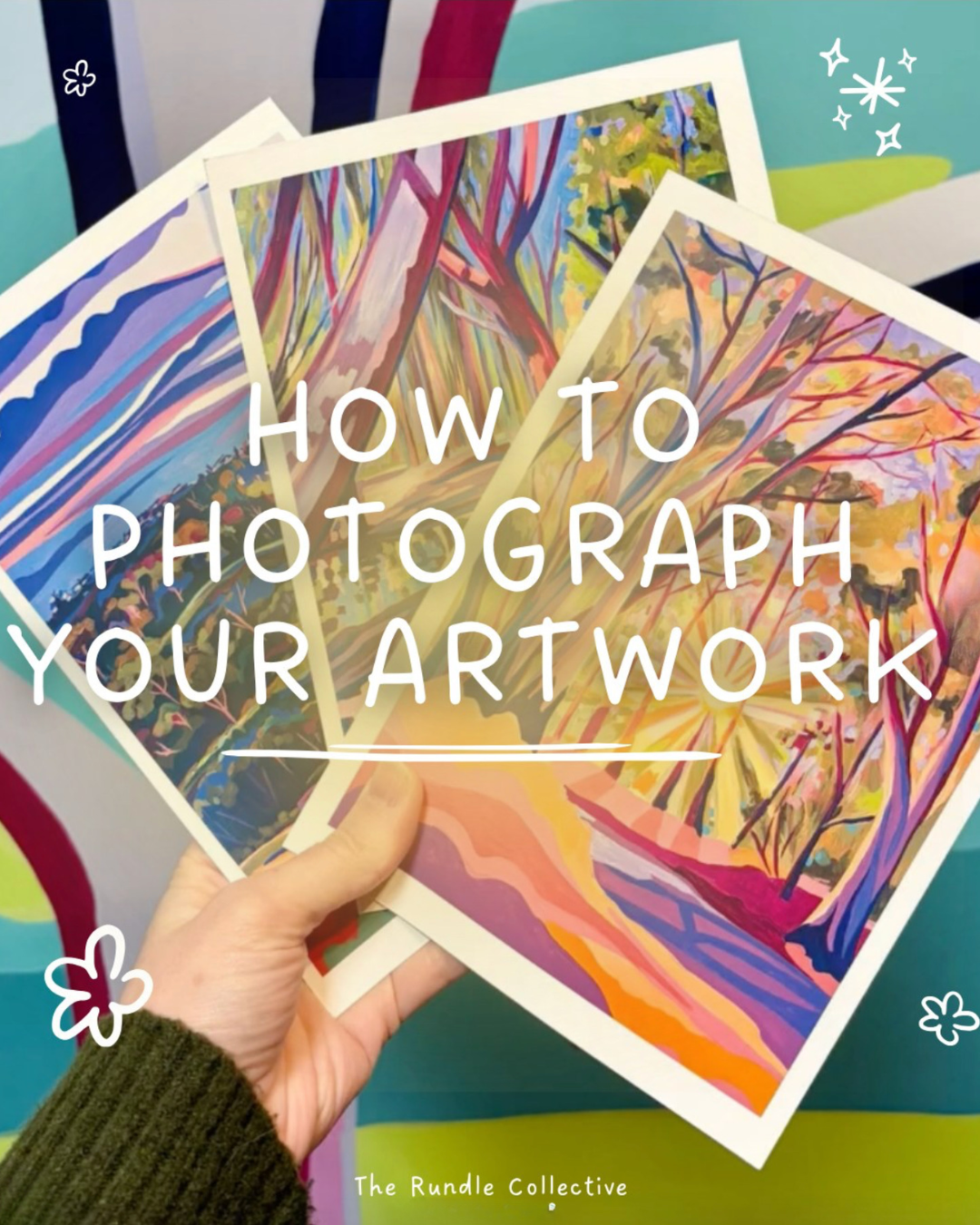
How to Photograph Your Artwork (Without a Fancy Camera)
Good photos of your work matter.
You’ll use them for your website, Instagram, grant applications, exhibition proposals, portfolios, press, online stores and probably about fifty other things.
The good news?
You don't necessarily need an expensive camera or professional studio setup.
A recent phone, decent natural light and a little bit of patience can get you a long way.
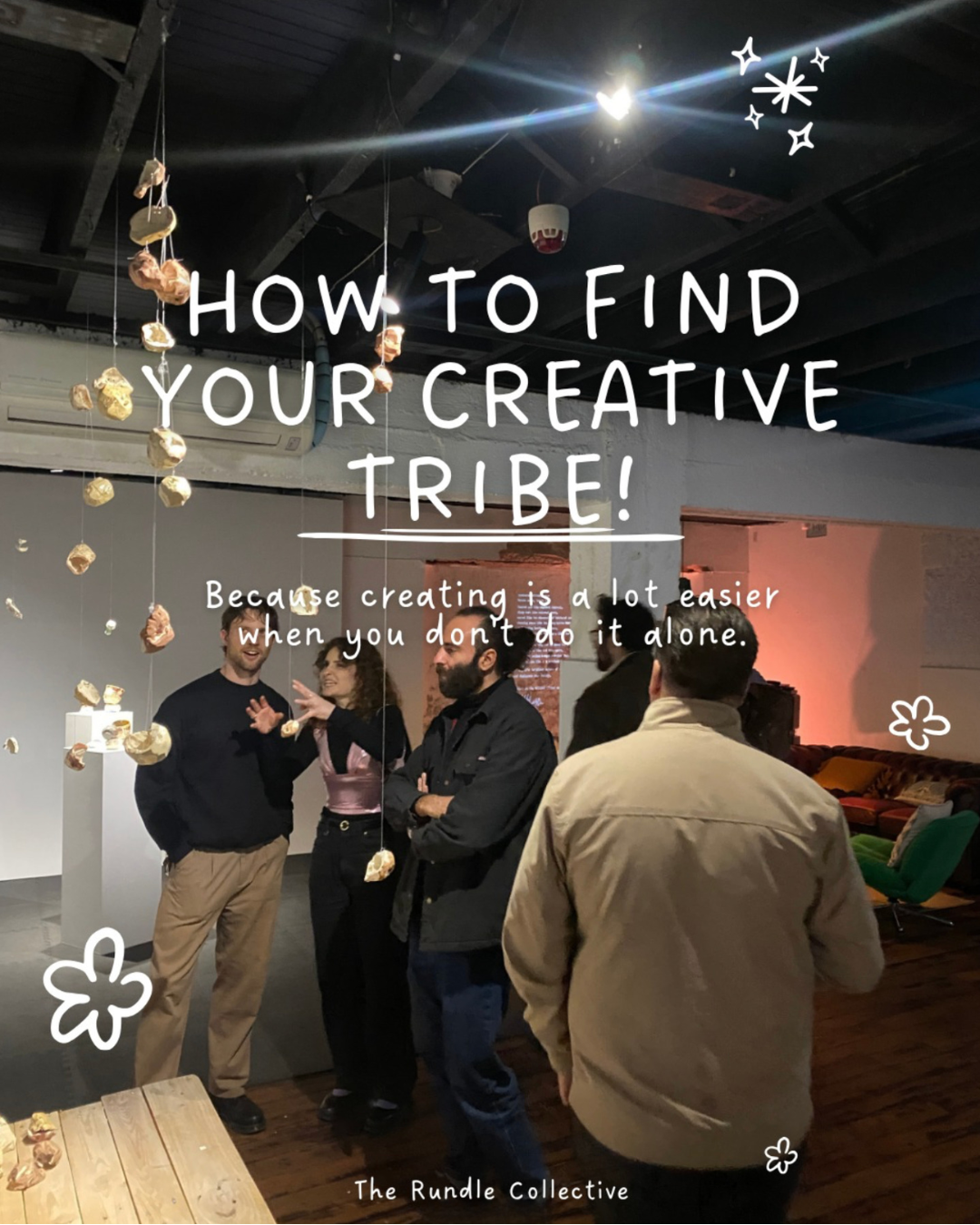
Finding Your Creative Community (When You Don't Know Anyone)
Being a creative can be surprisingly lonely.
A lot of the actual making happens alone, and when you're emerging into the creative industry it can sometimes feel like everybody else already knows each other.
They don't.
And you don't need to wait for someone to invite you into the creative community.
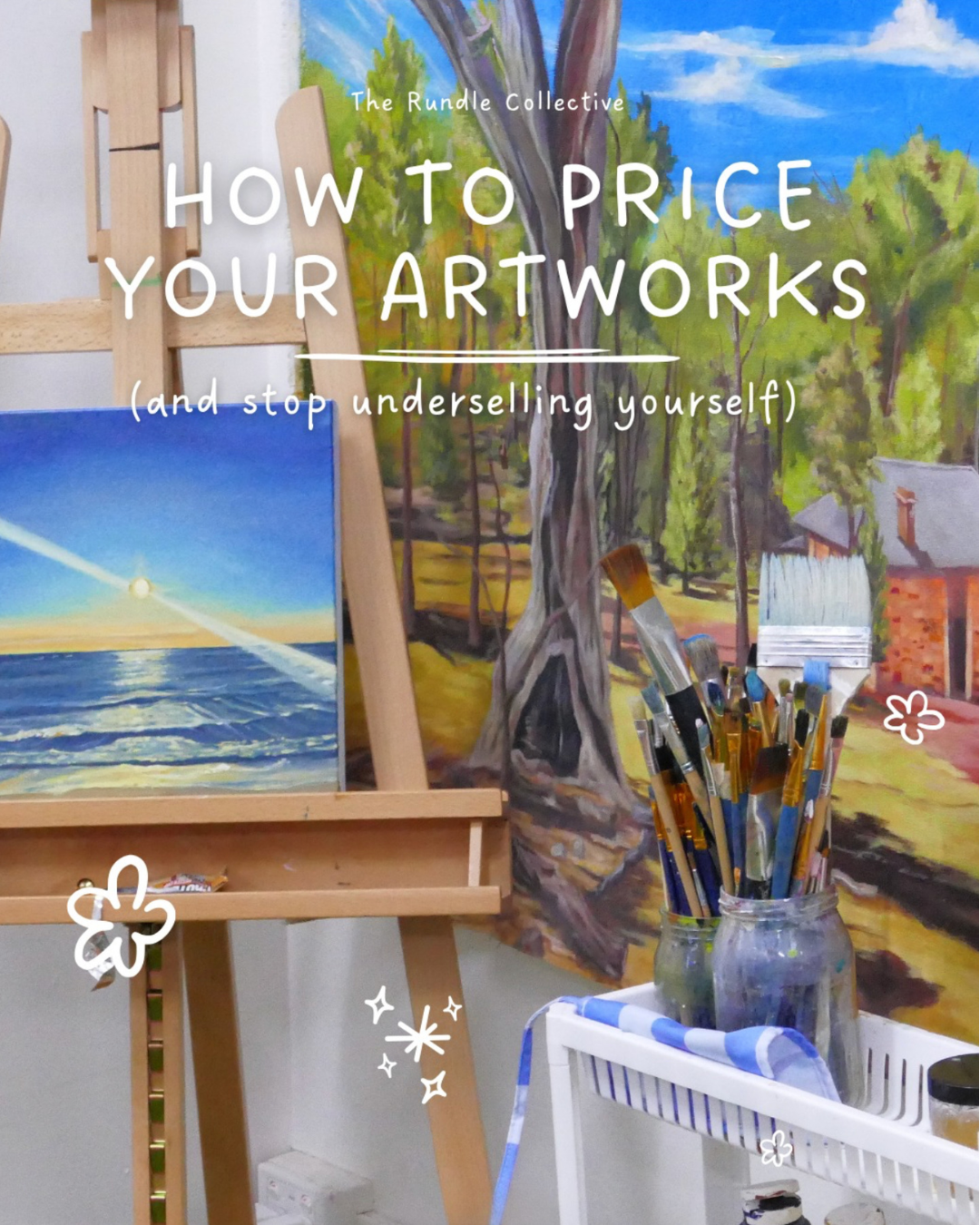
How to Price your artwork (without just making up a number)
Pricing also reflects where you are professionally.
Things like your experience, exhibition history, demand for your work, previous sales, commissions, awards and the development of your practice can all influence your pricing.
Your prices don't need to stay the same forever.
As your practice grows, your prices can grow with it.
Look at the market — but don't copy it
Research artists working at a similar career stage, with similar materials, scale and audiences.
This gives you context.
It doesn't mean finding someone whose work looks vaguely like yours and copying their prices.
You’re looking for a realistic range and understanding where your work sits within it.
Keep your pricing consistent
If an artwork is $600 on your website, it shouldn’t suddenly be $450 at a market and $750 in a gallery.
Consistency builds trust with collectors, galleries and customers.
You also need to factor in gallery commission when establishing your prices. If a gallery takes a commission, avoid simply increasing the price in that gallery to compensate. Your retail pricing should ideally remain consistent wherever the work is sold.
Create a system
Having a pricing system makes everything much easier.
For paintings, you might develop pricing based on size.
For ceramics, jewellery or products, you might use:
Materials + labour + overheads + profit = base price
Then check that figure against your wider market and adjust where appropriate.
The exact formula matters less than having a method you can explain and repeat.
Don't price based on whether you think someone will buy it
This is a big one.
It can be tempting to think:
“Would someone really pay $500 for something I made?”
That isn't a particularly useful way to price your work.
Your price should reflect the work, your costs, your time, your practice and your market — not your confidence level that particular day.
When should you increase your prices?
There isn't a magic milestone, but it might be time to review your pricing when you're consistently selling work, demand has increased, your experience and exhibition history have grown, your costs have increased, or your current pricing no longer reflects the time going into the work.
Price increases also don't need to be enormous.
Small, considered increases over time are much easier to manage than suddenly doubling your prices.
The biggest thing to remember
Your artwork isn't just the materials sitting in front of you.
You're also pricing the years you spent developing your skills, the failed experiments, the studio expenses, the hours nobody sees and the experience that allowed you to make that piece in the first place.
Build a pricing structure that is sustainable for your practice — because being able to continue making the work matters too.
The Creative Toolkit is a growing collection of practical resources from The Rundle Collective, created to help emerging creatives navigate the business, opportunities and realities of building a creative practice.
Stuck? Getting Through a Creative Block
Creative block happens to pretty much everyone.
Sometimes you have plenty of ideas but can't make anything.
Sometimes you desperately want to create but have absolutely no idea what to make.
And sometimes you're simply exhausted.
The first thing to know is that forcing yourself to create your next masterpiece usually isn't the solution.
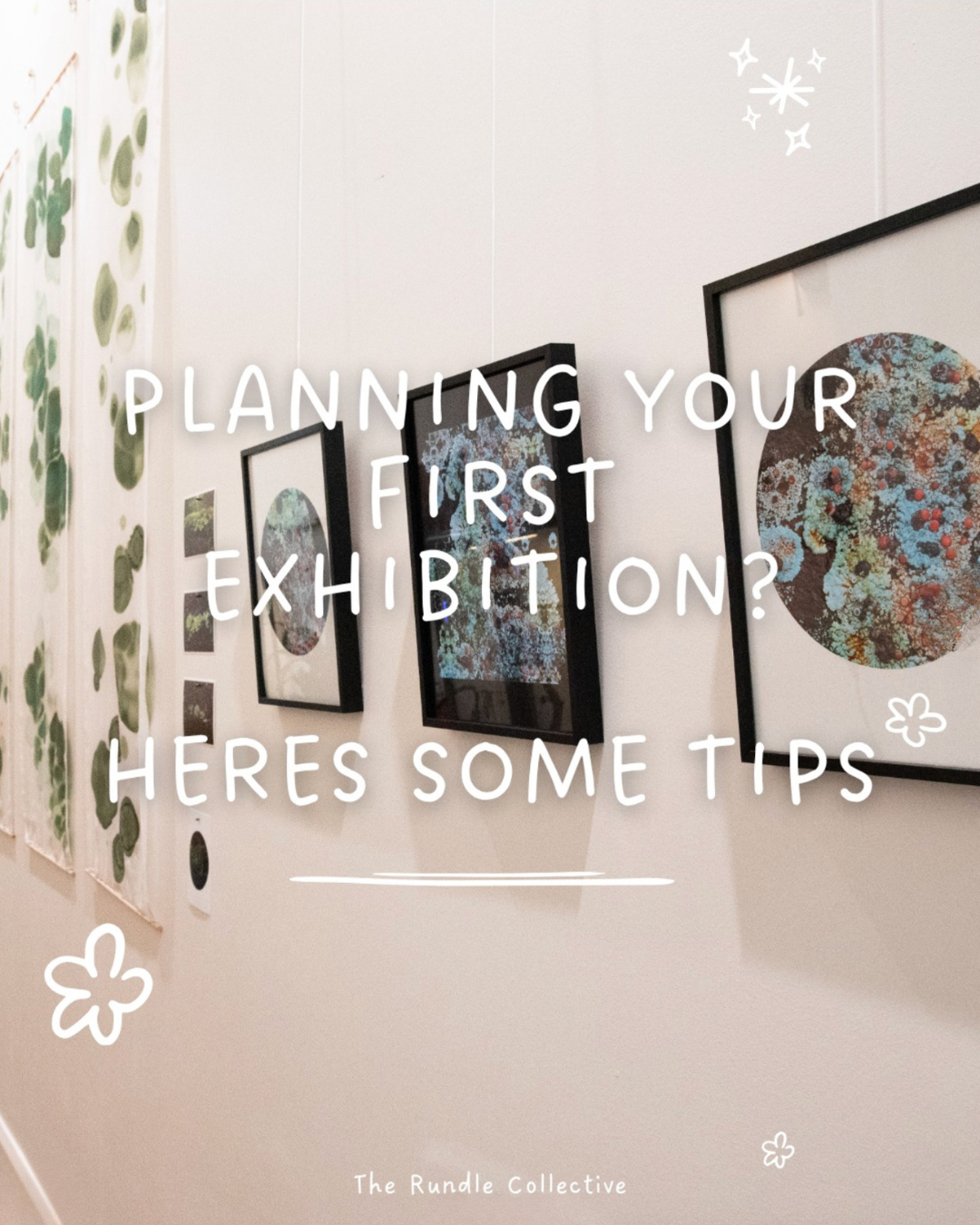
Planning Your First Exhibition: Where Do You Even Start?
So, you want to have an exhibition.
Exciting.
Also potentially overwhelming when you suddenly realise that making the artwork is only one part of actually putting on a show.
Whether you're exhibiting in an artist-run space, gallery, studio or unconventional venue, breaking the process into stages makes everything much more manageable.
How to Actually Sell & Market Your Art
You can make incredible work.
But if nobody knows it exists, selling it becomes significantly harder.
Marketing your art doesn't mean becoming a salesperson every time you open Instagram. It's really about helping people discover your work, understand it, connect with it and know how they can support you.